
It wasn’t all that long ago that I was up in the Santa Maria area for the Santa Barbara Vintner’s Festival. It was a wonderful event held at the grounds of the Firestone Winery with something like 90 wineries represented, and 60 chefs! Sounds like a wino-foodies dream, doesn’t it? And while we did enjoy the day immensely, we quickly learned there was something putting limits on our desire to indulge…and that was a lack of diversity. While some of the wine was amazing….it was nearly ALL Pinot Noir! There was a Cab here and there, and a splattering of other sips I have since forgotten, but for the most part Pinot ruled the day.
I mention my sad experience from about four years ago because although I have been visiting the lovely Santa Barbara area (the wine region is fairly huge, and includes but is not limited to 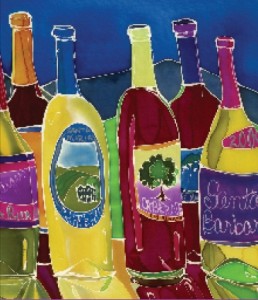 Santa Maria, Los Olivos, and Santa Ynez valley) for its wine country since the early nineties, this experience made me all the more appreciative of the relatively tiny wine valley I now call home. One of the greatest things about Temecula’s wine country is what people in the know call “microclimates”. (We are talking about those folks who know a lot more about vines and soil and climate, and the sum of all the parts called “terroir” than little ol’ me. I am just passing on what I’ve gathered over the years from listening to them). I guess what that means is that we have out here in our valley many different diverse ecological sects, which apparently vary enough to support grapes that benefit from those differences. I am not saying that every type of varietal grows well here, but I will say that it seems this somewhat complex landscape does allow for some good stuff from many wine regions.
The big boys…the most well known and historically identifiable grapes, the most common of the Bordeaux berries, are the ones I honestly have the hardest time with out here. I am sure that some of the locals will hate me for saying that, but this is my personal truth. If you have a better story, bring it. So, anyway, good Cabernets, while possible, are what I have found the least of in Temecula. That goes for Merlots as well. That doesn’t mean you won’t find an outstanding Cabernet at the right winery if you are there at the right time. I have heard more than one senior winery associate say that Cabs are pretty hearty and do just fine in our arid little valley. I can only speak from what has hit my own palate, however, and the little bit of wisdom I have gleamed from quite a few years working in different wine houses. The Bordeaux region is damper and colder on average than So Cal….and that’s just how it is….
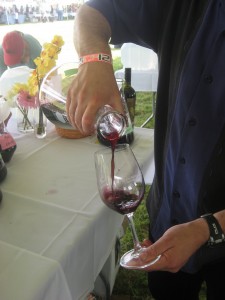 That said, some of the other lesser known or lesser produced wines from that region, such as Cabernet Franc, and Petit Verdot are quite often robust, interesting and all around impressive. I’m not sure why these varietals from the Bordeaux region handle heat and gravely, loam soil better than their more popular counterparts, but I will say when you get to Temecula and you see one on a tasting list don’t pass it up.
Then there are the varietals from many other regions that excite me and can be made into some of the best wines I have ever had the pleasure of consuming. No joke folks….the best….The Rhône’s love our soil, our climate, our everything. Syrahs are heavy, sometimes peppery, sometimes screaming out with vanilla but almost always jammy. I personally took one 2007 Temecula Syrah to a gathering with some Los Angeles wine snobs present ( I worked in the restaurant business in LA long enough to have residual friends who still work for high end joints that brag an impressive wine list). I didn’t tell anyone what I had in my brown bag, and waited until the first glass had been consumed for the most part. Then, casually, I moved about the room with bottle in hand, covertly covering the label with my palm. The nearly black elixir swirled and pooled in the bottom of glass after glass, and then, I waited. I didn’t have to wait long either, as the “m-mm’s”, and “oh, my’s” emanated from my guests. It was very satisfying to tell them it was a wine from Temecula…and not even a Reserve at that.
So, my “put that in your pipe and smoke it” Syrah was an example to my friends that we can make at least one kind of great wine.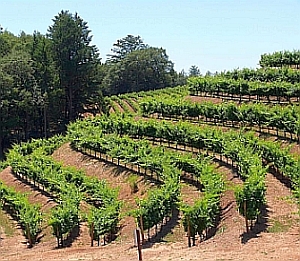 But there is so much more, and Grenache, Mourvedre (which actually hails originally from Spain), and Cinsault vines thrive and meet their true telos in good ol’ Temec. The Spanish ones love us as well….try finding a Tempranillo that isn’t brilliant in this town, unless she’s from out of town. The Mediterranean types…..well, those are amazing too.
I think that the best thing about this wine region, aside from its accessibility, might just be the huge selection of wines you will find here. Not that every winery knows what to do with them….which seems to be the biggest challenge. Maybe I need to tell you exactly where to go for what….so looks like there’s some research in my future!
Peace, love and vino!



 barreled Reserve Tempranillo/Petit Syrah (the barrel is currently tapped to sell some futures on this amazing blend), and that’s when things got interesting. Once again, I personally was blown away by our wine when positioned next to another wine regions “best” wines. The reds we just tried, while fairly good, did nothing to make my taste buds dance the way this humble locally grown number did. So I commented on how sad it is that many local wineries made such crap when this kind of stuff was obviously not only possible, but consistently made by our winemaker, Doug. There are quite a few other craftsmen (wish I could say I knew of a female winemaker out here but I don’t!) making some great elixirs….but there are at least as many helping perpetuate our bad reputation.
 and their keepers. There is a lot of amazing wine to talk about, and to hopefully have a chance to share with you. Sadly, there are many wines made in this Valley that are little more than expensive, fortified Kool-Aid’s. I cannot deny that. That’s what happens when a wine region is close enough to, hmm, say nearly 25 million people for them to drive an hour to go “winery hopping”. Hey, that does have its place, but it also made it difficult for “real” winemakers to gain clout for many years if the Temecula zip code was attached to their name.
 I have been living and working in Temecula for about five years now, but the vines and wineries have been here much longer. And I am an inquisitive one, so I have been asking questions of every wine person I have met since I started in the business, sometimes to the point of annoyance. But I am big into authenticity, which is part of what drew me to wine in the first place. Let’s face it, twenty years ago when I tasted my first French Merlot my tongue didn’t quite get it. I mean, it wasn’t cough syrup or vinegar, but it certainly wasn’t a Margarita or Pina Colada. But I was a bartender in Pavilion French Café, and if a guest bought a glass of wine for me, it was good form to drink it. Within a short time, the allure of the fruit that is the canvas for so many works of art has raised my curiosity (and changed my pallet) enough to start “researching” it. Well, and drinking more of it.
 military, as we were, in construction (there were lots of “cottages” going up), or were commuting to one of the three metropolises an hour plus away. The saving grace of this generic bedroom community for me was that not ten minutes from the tract homes and Applebee’s was Temecula Wine Country.